
About TGU
Message from the President
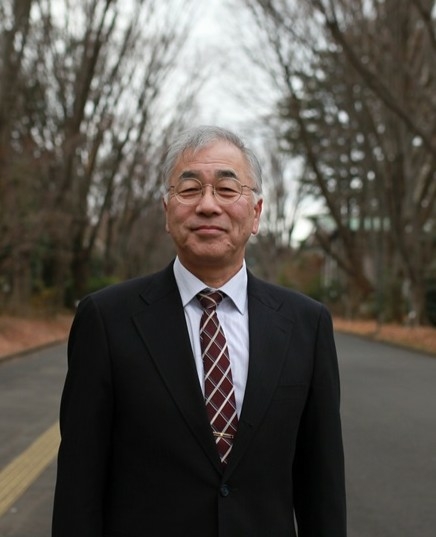
President SASAKI Koju
My name is Koju SASAKI, and I was appointed as President of Tokyo Gakugei University on April 1, 2026 . I feel a great sense of responsibility and mission in assuming this important position at the University, which has long played a significant role in developing talented educators in Japan. I have renewed my determination to create a new role for the University in the world of education, which is currently facing a major transition.
Tokyo Gakugei University, the history of which can be traced back to teacher training schools launched in the Meiji Period, was newly founded under the postwar university system in 1949 through the reform of the education system in Japan. Ever since then, the University has evolved as one of the country's core universities specialized in teacher training, which is the backbone of school education in Japan. The foundation of the present University has been shaped through consistent efforts to reexamine educational content and methods according to changes in society and the school environment, and to nurture educators equipped with practical ability and specialized knowledge. With teacher training that integrates theory and practice, based on practical education and research in collaboration with affiliated schools, the University boasts a long history of sending its graduates in large numbers to serve as educators throughout Japan. The pioneering spirit for education and practical wisdom cultivated over many years and the active roles our alumni play in various parts of Japan have served as a firm foundation for the University.
The environment surrounding education is facing a major turning point due to rapid population decline, increasingly complex educational issues, advances in Information and Communication Technology (ICT), and response to diversity. National universities' increasingly severe financial conditions have also led to reducing the functions of universities and departments specialized in teacher training. Furthermore, the education policy currently being implemented by the Japanese government urges a significant increase in the flexibility of teacher certification standards and the diversification of educators, which has made it difficult to secure and develop educational personnel under the conventional framework. Accordingly, it is necessary to create a new framework for human resources development.
Considering this context, the University should not be a mere conventional teacher training institution and should instead play the role of a core university pursuing comprehensive and pioneering education, paving the way for the future of education in Japan.